
Have you lost a tooth and want to restore your smile? Dental implants are a popular tooth replacement option that can help restore chewing function, support oral health, and improve the appearance of your smile. If you are considering dental implants in Al Nahda, Sharjah, understanding the procedure, benefits, and recovery process can help you make an informed decision.
At Roots Medical Centre, Al Nahda, Sharjah, we believe that informed patients can make better decisions about their oral health. Here is everything you need to know about dental implants and how they work.
What Are Dental Implants?
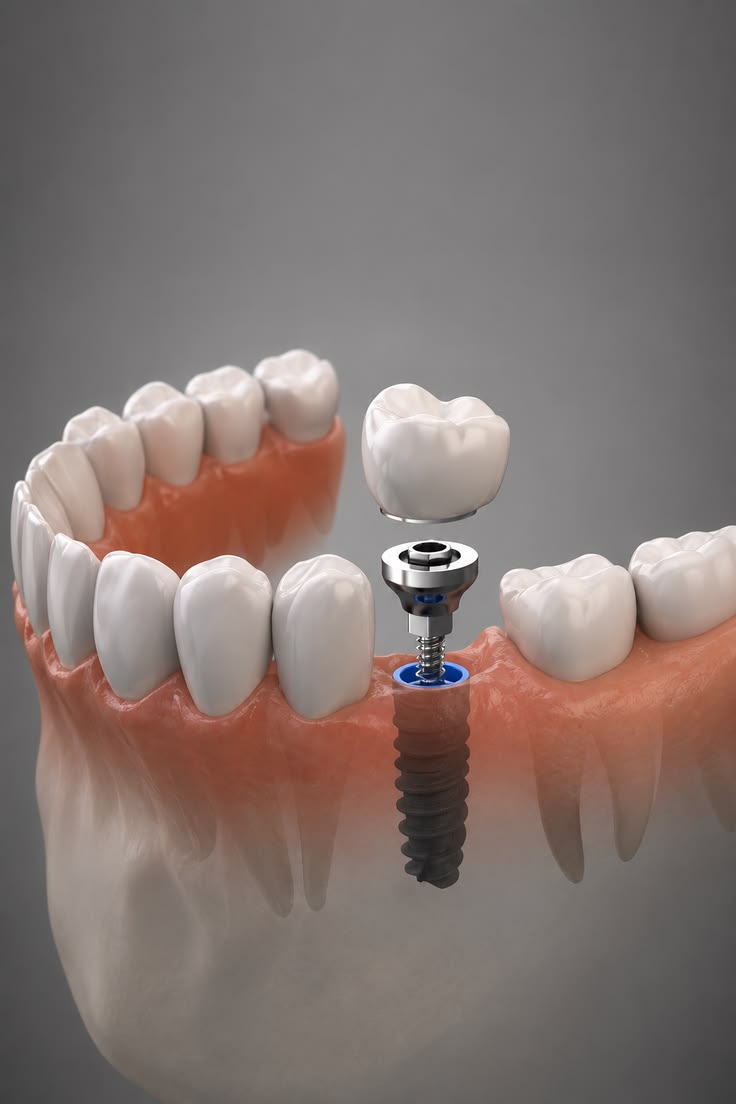
Dental implants are artificial tooth roots, usually made from titanium or another suitable biocompatible material. They are placed into the jawbone to support a replacement tooth, bridge, or denture.
Unlike removable dentures, an implant is designed to provide a stable foundation for replacement teeth. Dental implants can be considered for people who have lost one or more teeth because of decay, injury, or other dental conditions.
A typical dental implant restoration consists of three main components:
- Implant: A small post placed in the jawbone that acts as an artificial tooth root.
- Abutment: A connector that attaches the replacement tooth to the implant.
- Dental crown: The visible part that resembles a natural tooth.
The exact treatment depends on your oral health, the number of missing teeth, and your individual dental needs.
How Do Dental Implants Work?
The dental implant procedure usually involves several stages. Your dentist will assess your oral health and develop a personalised treatment plan before recommending the most appropriate approach.
1. Initial Dental Consultation
The first step is a comprehensive dental examination. Your dentist will assess your gums, jawbone, remaining teeth, and overall oral health. Dental X-rays or other imaging may be required to evaluate bone levels and plan the implant placement.
This assessment helps determine whether you are a suitable candidate for dental implants.
2. Dental Implant Placement
During implant surgery, the dentist places the implant into the jawbone under appropriate anaesthesia. The procedure depends on the location of the missing tooth and the complexity of the case.
Some patients may require additional treatment, such as bone grafting, before an implant can be placed.
3. Healing and Osseointegration
After placement, the implant needs time to heal and bond with the surrounding jawbone. This process is known as osseointegration.
Healing time varies between patients and depends on factors such as bone quality, general health, and the treatment plan. Your dentist will advise you when the implant is ready for the next stage.
4. Attaching the Replacement Tooth
Once healing is sufficient, the dentist attaches the abutment and a custom-made dental crown or another suitable restoration.
The final restoration is designed to complement your existing teeth and help restore your ability to bite and chew comfortably.
What Are the Benefits of Dental Implants?
Dental implants offer several potential benefits for suitable patients.
- Natural-looking appearance: Replacement teeth can be designed to blend with your smile.
- Improved chewing function: Implants provide a stable foundation for replacement teeth.
- Support for neighbouring teeth: A single-tooth implant generally does not require the adjacent teeth to be prepared as bridge supports.
- Jawbone support: Implants can help reduce the bone loss associated with missing teeth.
- Long-term tooth replacement: With proper care and regular dental check-ups, implants can last many years.
However, results vary, and implants require ongoing oral hygiene and professional maintenance.
Who Is a Suitable Candidate for Dental Implants?
Dental implants may be suitable for adults who have one or more missing teeth and sufficient jawbone to support an implant.
Your suitability may depend on:
- The health of your gums and jawbone.
- Your general health and medical history.
- Whether gum disease or other oral conditions need treatment first.
- Smoking habits and other factors that can affect healing.
- Your ability to maintain good oral hygiene and attend follow-up appointments.
Even if you have bone loss, you may still have treatment options. Your dentist can assess whether additional procedures are appropriate.
Are Dental Implants Painful?
Many patients are concerned about pain during dental implant surgery. Local anaesthesia is generally used to minimise discomfort during the procedure.
Some swelling, tenderness, or mild discomfort may occur after surgery. These symptoms can usually be managed with the aftercare instructions and medication recommended by your dentist.
Follow your dentist’s advice on eating, cleaning your teeth, and returning for follow-up visits. Contact your dental team if you experience severe or worsening pain, persistent bleeding, or signs of infection.
How Long Do Dental Implants Last?
Dental implants can last for many years, but their lifespan varies depending on oral hygiene, general health, bite forces, smoking, and regular dental maintenance.
To help protect your implant:
- Brush twice daily using a suitable toothbrush.
- Clean between your teeth and around the implant every day.
- Attend regular dental check-ups and professional cleaning.
- Avoid smoking and follow your dentist’s recommendations.
- Seek advice if your implant or replacement tooth feels loose or uncomfortable.
Remember that the implant itself and the crown have different maintenance needs. Your dentist can help you care for both.
How Much Do Dental Implants Cost in Al Nahda, Sharjah?
The cost of dental implants in Al Nahda, Sharjah, depends on several factors, including the number of implants required, the type of restoration, the condition of the jawbone, and whether additional procedures are necessary.
A consultation is the best way to understand your treatment options and receive a personalised estimate. Ask your dental provider about the complete treatment plan, expected timeline, follow-up care, and any additional costs.
Why Consult Roots Medical Centre in Al Nahda, Sharjah?
Choosing the right dental provider is an important step when considering tooth replacement. Roots Medical Centre provides dental care in Al Nahda, Sharjah, with a focus on understanding patients’ needs and helping them explore appropriate treatment options.
If you have missing teeth or would like to learn more about dental implants, arrange a consultation to discuss your oral health and possible treatment options.
Take the first step towards restoring your smile.
Clinic: Roots Medical Centre
Location: Office No. 6, M Floor, Sama Al Nahda Tower (Old Al Zarooni Building), Al Nahda, Sharjah, UAE
Phone: +971 6 551 9866
Website: https://rootsmedicalcentre.com/
Contact the clinic to enquire about a dental consultation and find out whether dental implants may be suitable for you.
Frequently Asked Questions About Dental Implants
Can dental implants replace a single missing tooth?
Yes. A single dental implant can support an individual crown when clinically appropriate. Your dentist will assess the surrounding teeth and jawbone before recommending treatment.
How long does dental implant treatment take?
Treatment may take several months from implant placement to the final restoration. The timeline depends on healing, bone quality, and whether additional procedures are needed.
Can dental implants look like natural teeth?
Yes. The replacement crown can be customised to match the colour, shape, and size of your surrounding teeth as closely as possible.
Are dental implants better than dentures?
Dental implants and dentures have different advantages. Implants offer a fixed replacement option, while conventional dentures are removable. The most appropriate choice depends on your oral health, preferences, budget, and clinical suitability.
How do I get started with dental implants in Al Nahda, Sharjah?
Start by booking a dental consultation. Your dentist can examine your mouth, review any necessary imaging, and explain the treatment options available to you.
Medical disclaimer: This article is for educational purposes only and does not replace a professional dental examination or personalised medical advice.